Your Clothes Dryer Buying Guide
Big loads, small spaces, and everything in between — we break down the essentials so you can find a Haier dryer that’s right for your home... read more
4 min read
Every home needs a reliable clothes dryer, but with the several types of domestic dryers out there, which do you go for?
Do you choose a tried-and-tested vented dryer or upgrade to a modern heat pump dryer? They both have their benefits, and Haier offers great options in both categories. In this article, you’ll learn how the different technologies dry clothes, how they stack up against each other, the ‘watchouts’, and how to decide what dryer type is best for your home. (Spoiler: it’s probably a heat pump dryer).
Heat pump dryers stand out for their energy efficiency. They use closed-loop heat exchange technology to recycle the hot air they generate. Air is heated and circulated through your clothes to absorb moisture. That air is then cooled to condense the water, which is collected or drained away, and the dehumidified air is reheated and recirculated.
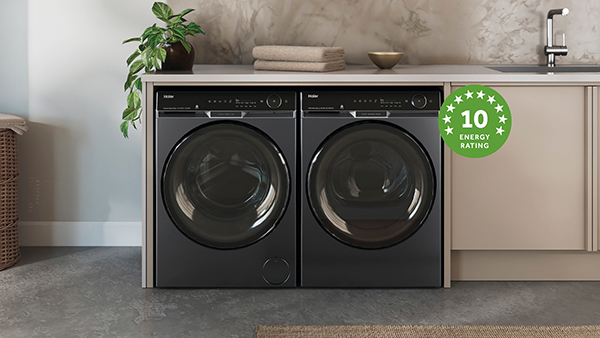
Heat pump dryers use approximately 60% less energy compared to a vented dryer,* which is why heat pump dryers typically have a 6–10 Energy Star rating versus just 1–2 stars for vented dryers.

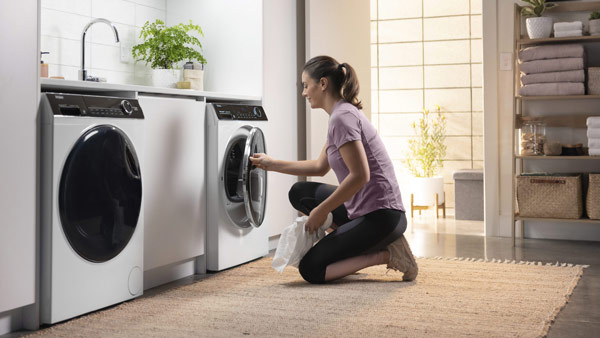
Another big tick for heat pump dryers is their flexibility. They don’t require venting to the outdoors, so can be placed anywhere in the home. This makes them perfect dryers for apartments, heritage homes, and rental properties.
Heat pump dryers are ideal for:
Image credit: Alexandra Hasiop.
However, if you are planning on wall mounting, you might want to think again. It is not recommended to wall-mount a heat pump dryer because of its weight. They can weigh more than 50kg and should be placed directly on a flat, stable floor or stacked on a compatible front-loading washing machine using an approved stacking kit.
The Haier stacking kit even comes with a thoughtful pull-out tray for loading and unloading your washing. Water drainage may also need to be considered for models that do not come with a water tank.

Heat pumps use gentle drying temperatures (around 50°C compared to 70–75°C in vented dryers), which are kinder on fabrics, and some can even handle delicate items like wool, ensuring your clothes stay in shape for longer.
Look for a Woolmark Blue certified wool cycle for delicate drying of hand-wash only wool items. Drying racks are now available in some clothes dryer models to gently aerate items that require extra gentle clothes drying.
Haier’s advanced 9kg 600 Series Heat Pump Dryer models come with an innovative Refresh with Steam cycle.
This cycle is specially designed to breathe new life into your clothes, reducing smells and smoothing out wrinkles in shirts and jumpers without the need for a complete wash, making clothes care both effective and easy.

Step up to the Haier 10kg 600 Series Heat Pump Dryer and you get an Ultra Reverse Drum to reduce tangles and improve drying, plus Ultra Sense technology for drying bulky puffers or duvets.
The new Haier 8kg 500 Series Heat Pump Dryer offers a 'Speed up' for quick drying when time is limited.

For different household needs Haier 300 Series Heat Pump Dryers are a cost-effective option.
With up to 15 dry cycles including Delicate, Synthetics, and Express cycles, they provide the same energy-efficient technology in different drum capacities to suit your family size.
Vented dryers are a classic choice for households looking for fast drying times, easy install and straightforward operation.
The trade-off for this efficiency is a higher operating cost when compared to a heat pump dryer, and the need for external venting, limiting placement.
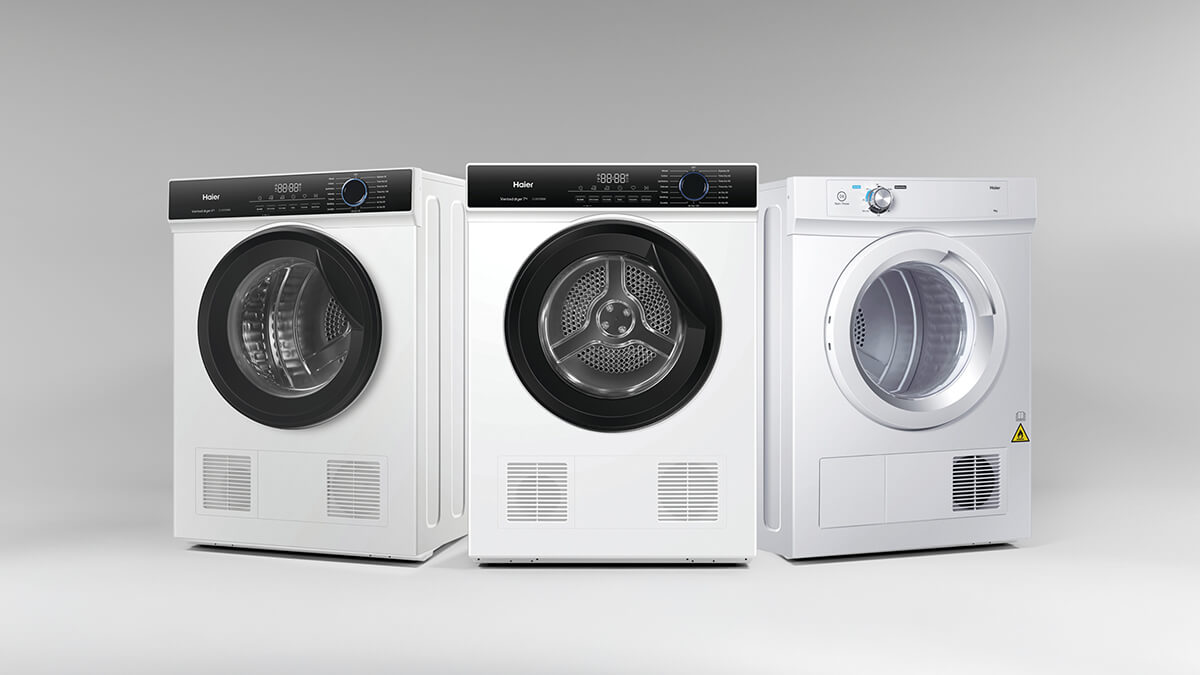
Vented dryers operate by drawing in ambient air, heating it using electric coils, and then circulating this hot air through the drum containing wet clothes. As the heated air passes through the tumbling clothes, it absorbs moisture through evaporation. The moisture-laden air is then expelled out through a vent or hose.
The direct venting method is faster than a heat pump dryer however, this extra speed comes with higher energy consumption, which can bump up your power bill. High operating temperatures can be harsh on delicate fabrics and may cause shrinkage or damage. If you’ll be drying delicates, heat pump dryers are a better option.
Vented Dryers expel plenty of hot, moist air and – like the name suggests – require outdoor venting. They’re therefore better suited for spaces with the option for outdoor venting. As this limits where you can place them, it should be considered before committing to a vented dryer model.
Choosing the best dryer for your home is all about understanding the unique features and benefits each type offers. Whether you prioritise energy efficiency, placement flexibility, or functionality, there’s a solution for your needs:
| Features | Heat Pump Dryer | Vented Dryer |
|---|---|---|
| Energy efficiency | ||
| Up-front cost | ||
| Annual cost | ||
| Specialised cycles | ||
| Fabric care | ||
| Drying times | ||
| Installation options |
From energy-efficient heat pump dryers to fast-drying vented dryers, you can find the perfect fit for your home and lifestyle in Haier’s range of clothes dryers. Remember to assess your space, ventilation options, your laundry needs, and budget to make a choice that seamlessly fits into your lifestyle.
To learn more, Your Clothes Dryer Buying Guide provides a detailed guide on what to consider when buying a clothes dryer.
*Based on a 2-star energy-rated Haier 7kg 300 Series Vented Dryer with 315kWh annual consumption, compared with a 7-star energy-rated Haier 7kg 300 Series Heat Pump Dryer, and 10-star energy-rated 10kg 600 Series Heat Pump Dryer that consume 130kWh and 118kWh per year, respectively. Energy ratings tested in accordance with AS/NZS 2442.2.
Big loads, small spaces, and everything in between — we break down the essentials so you can find a Haier dryer that’s right for your home... read more
4 min read
The joy of a soft, fluffy towel after a shower is a daily luxury. Yet, over time, towels... read more
4 min read

Great spotting! Now keep your eye on the ball and enter your details to go in the draw to win this month's prize. Terms & Conditions apply.
Congratulations and good luck! You're now in the draw to win and we have sent confirmation to the email address you provided. Terms & Conditions Apply.